
Key Takeaways
- Hunza, Skardu, and Fairy Meadows are strong choices for a first trip focused on mountain scenery.
- Lahore and Islamabad offer an easier introduction to Pakistan’s cities, food, history, and culture.
- Northern Pakistan is best for trekking, photography, lakes, road trips, and outdoor travel.
- History lovers should include Lahore, Taxila, and Mohenjo-daro.
- Most travelers should allow at least 10 to 14 days if they want to combine major cities with northern destinations.
Pakistan has far more to offer than a few famous mountain valleys. The best places to visit in Pakistan range from Hunza and Skardu to Lahore, Islamabad, ancient Taxila, and the ruins of Mohenjo-daro. You can spend one trip hiking beside some of Asia’s highest peaks, then spend the next day exploring Mughal architecture or a centuries-old bazaar. For US travelers planning their first visit, the key is choosing destinations that match your time, interests, and comfort level.
Why Visit Pakistan in 2026?
Pakistan gives travelers a mix of mountains, history, culture, food, and outdoor adventure that few destinations can match in one country. The northern areas of Pakistan are the biggest draw for many international visitors, but they are only part of the picture.
Pakistan currently has six UNESCO World Heritage properties. They include Mohenjo-daro, Taxila, the Fort and Shalamar Gardens in Lahore, Rohtas Fort, Makli, and the Buddhist Ruins of Takht-i-Bahi and neighboring remains. UNESCO also lists many more sites on Pakistan’s Tentative List, including Deosai National Park and the Kalasha Valley Cultural Landscape.
The country also works well for different types of travelers. A couple can build a scenic honeymoon around Hunza or Skardu. Families can choose easier sightseeing in Islamabad, Lahore, or Hunza. Experienced hikers can head toward Fairy Meadows or plan a longer trek toward K2.
There is another reason to consider Pakistan now. More travelers are looking beyond the standard tourist routes. Current travel guides and traveler platforms continue to highlight places such as Hunza, Lahore, Skardu, and Fairy Meadows among the country’s major attractions.
At Eagles Adventure, we recommend choosing your route based on the season first. Mountain roads, passes, and trekking routes can change with weather. A good itinerary leaves some room for delays instead of trying to cover every destination in one trip.
Best Places in Northern Pakistan
Northern Pakistan is the best region for travelers who want mountains, lakes, valleys, road trips, and hiking. The region covers a large area, so don’t try to see everything in a few days.
1. Hunza Valley
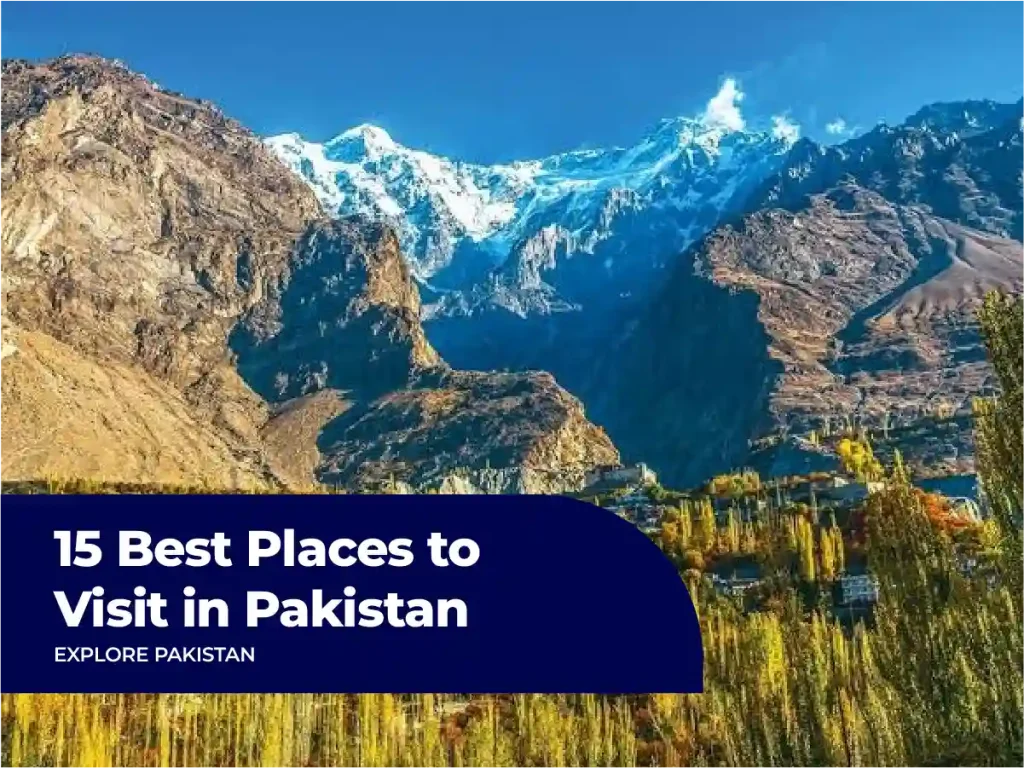
Hunza Valley is one of the best places to visit in Pakistan for a first-time mountain trip. The valley combines dramatic peaks with old forts, villages, orchards, and easy access to several scenic viewpoints.
Karimabad is a practical base for exploring the area. From here, you can visit Baltit Fort, Altit Fort, and Eagle’s Nest. Further north, the scenery changes around Attabad Lake, Gulmit, and Passu.
The Karakoram Highway runs through the region, so the journey itself becomes part of the trip. On our tours, we recommend slowing down rather than treating Hunza as a quick stop between Islamabad and the border.
Best time: April to October. Spring is good for blossoms, while autumn brings changing colors. Summer offers easier access to many higher areas.
How long: Four to six days works well for a first visit. Add more time if you want to explore Upper Hunza.
Insider tip: Don’t spend your entire stay around Karimabad. Give yourself at least one full day for Upper Hunza.
For a deeper look at routes, timing, and things to do, see the Hunza Valley Travel Guide.
2. Skardu and Baltistan
Skardu is a strong choice if you want a mix of mountain scenery, lakes, deserts, forts, and access to some of the world’s highest peaks. It also serves as an important starting point for expeditions toward K2 and other major Karakoram peaks.
The area around Skardu has more variety than many first-time visitors expect. You can see the Katpana Cold Desert, Satpara Lake, Upper Kachura Lake, Shigar Valley, and historic forts within the wider region.
Skardu also works well for travelers who aren’t planning a serious trek. You can spend several days sightseeing by vehicle and still experience some remarkable natural beauty.
Best time: May to October for most sightseeing. Deosai is generally a summer destination because access depends on road and weather conditions.
How long: Five to seven days if you’re flying into Skardu. Allow extra time if you’re traveling overland.
Insider tip: Keep a spare day in your schedule. Flights and mountain roads can be affected by weather.
You can also explore the Skardu Travel Guide before planning your route.
3. Fairy Meadows and Nanga Parbat
Fairy Meadows is one of the most famous mountain destinations in Pakistan. Its main attraction is the view toward Nanga Parbat, one of the world’s highest mountains.
Getting there is part of the experience. Travelers usually leave the Karakoram Highway near Raikot Bridge, continue by local jeep on a rough mountain road, then hike toward the meadow. A jeep track is simply a rough road designed for four-wheel drive vehicles.
The route requires more effort than a normal sightseeing stop. That’s worth knowing before you book it. Once you reach the meadow, you can walk toward Beyal Camp and enjoy views of Nanga Parbat.
Best time: May to October, subject to weather and local access.
How long: Two to three nights at the meadow works well for most visitors.
Insider tip: Start the walking section early. The trail can feel much harder if you begin late in the day with a heavy backpack.
Read the full Fairy Meadows and Nanga Parbat Guide for a closer look at the road, hike, and planning details.
4. Swat Valley and Kalam
Swat Valley is one of the best places to visit in Pakistan for travelers who want green valleys, rivers, forests, and mountain scenery without going as far north as Hunza or Skardu.
Mingora and Saidu Sharif are useful starting points for exploring the region. Kalam takes you deeper into the mountains, with access to forests, rivers, lakes, and nearby valleys.
Swat can suit families particularly well when the itinerary doesn’t involve difficult hikes. It also works for travelers who want a shorter mountain escape from Islamabad.
Best time: April to October for most sightseeing. Winter brings snow to higher areas.
How long: Three to five days is enough for a focused trip.
Insider tip: Don’t judge travel time by distance alone. Mountain roads can make short distances take much longer than expected.
5. Naran, Kaghan and Babusar Pass
Naran and Kaghan offer an easier introduction to northern mountain travel for many visitors coming from Islamabad. The region has green valleys, rivers, waterfalls, and alpine lakes.
Lake Saif ul Mulook is the best-known attraction. Babusar Pass is another major highlight when the route is open.
Road access changes with the seasons, especially at higher elevations. That’s why you should check local conditions before setting your itinerary around Babusar.
Best time: May to October, with the exact opening period depending on snow and road conditions.
How long: Three to four days for the main highlights.
Insider tip: Don’t build your entire itinerary around crossing Babusar Pass. Treat it as a seasonal bonus rather than a fixed connection.
6. Neelum Valley, Azad Kashmir
Neelum Valley is a good choice for travelers who prefer rivers, forests, waterfalls, and smaller mountain settlements. The valley follows the Neelum River and offers a different feel from the drier terrain around Gilgit Baltistan.
Keran, Sharda, and Arang Kel are among the better-known stops. Arang Kel requires a separate uphill journey, so allow enough time instead of trying to squeeze it into a rushed day.
Best time: April to October for most travelers.
How long: Three to five days.
Insider tip: Build the trip around fewer stops. The valley is long, and moving hotels every night can leave little time for sightseeing.
For travelers who want a shorter option, Eagles Adventure currently lists Kashmir and Arang Kel trips through its domestic tour offerings.
7. Kumrat Valley
Kumrat Valley is a good pick for travelers who want forests, rivers, open spaces, and a quieter mountain setting. It sits in Upper Dir and is known for its wooded scenery and river views.
The valley feels different from the more developed tourist centers of Hunza and Naran. That can be part of its appeal, but it also means you should expect a simpler travel experience.
Best time: May to October.
How long: Three to four days.
Insider tip: Ask your local operator about road conditions before confirming your travel dates. Access can change after heavy rain.
8. Kalash Valleys, Chitral
The Kalash Valleys offer something different from the usual mountain sightseeing route. The area is known for the Kalash people, distinctive local traditions, festivals, and mountain villages.
Bumburet, Rumbur, and Birir are the main valleys associated with the Kalash community. Travelers should approach the area with respect and avoid treating local traditions as a performance for visitors.
The Kalasha Valley Cultural Landscape was added to Pakistan’s UNESCO Tentative List in 2026. That does not mean it is already a UNESCO World Heritage Site, but it shows its recognized cultural value.
Best time: Spring through autumn, with festival dates offering a different experience.
How long: Two to four days.
Insider tip: Learn basic etiquette before visiting. Ask before photographing people, homes, or ceremonies.
Best Cities and Cultural Sites
Pakistan’s cities add history, food, architecture, and everyday culture to a mountain-focused itinerary. They also make sense for travelers who don’t want every day to involve long drives.
Lahore
Lahore is one of the best cities to visit in Pakistan for history, architecture, and food. The Walled City area brings several major sights close together.
Badshahi Mosque, Lahore Fort, and Shalamar Gardens are the obvious highlights. Lahore Fort and Shalamar Gardens form one UNESCO World Heritage property. UNESCO currently lists the property as one of Pakistan’s six World Heritage sites.
The city is also worth visiting for its food. You can try traditional Pakistani dishes at established restaurants or explore the busy food areas around the old city.
Best time: October to March for more comfortable outdoor sightseeing.
How long: Two to three days.
Insider tip: Start your heritage sightseeing early. Lahore’s old city gets busy, and the midday heat can make walking less comfortable.
Islamabad and the Margalla Hills
Islamabad is a practical starting point for many Pakistan trips. The city has wide roads, green spaces, modern hotels, and easy access to the Margalla Hills.
Faisal Mosque is the city’s best-known attraction. The Margalla Hills offer short hikes and viewpoints above the capital.
Islamabad works especially well for families and first-time visitors who want a slower start before heading into the mountains.
Best time: October to April for comfortable city sightseeing. Spring can also be pleasant.
How long: Two days is enough for the main sights.
Insider tip: Keep Islamabad at the start or end of your itinerary. It gives you useful flexibility if mountain transport changes.
Mohenjo Daro and Taxila
Mohenjo Daro and Taxila are two of the most important archaeological destinations in Pakistan. They suit travelers who want to understand the country’s history beyond its Islamic and colonial periods.
Mohenjo Daro preserves remains linked to the Indus Valley Civilization. Taxila is associated with ancient Gandhara and sits near Islamabad, making it easier to include in a city-based itinerary.
Both are UNESCO World Heritage sites. UNESCO lists Taxila and the Archaeological Ruins at Mohenjo-daro among Pakistan’s six inscribed properties.
Best time: October to March is generally more comfortable for outdoor archaeological visits.
How long: Taxila can work as a day trip from Islamabad. Mohenjo Daro needs more planning because of its location in Sindh.
Insider tip: Don’t visit archaeological sites only for photos. A local guide can make the ruins much easier to understand.
Peshawar Old City
Peshawar offers a different side of Pakistan’s history and culture. The old city has traditional bazaars, historic buildings, food, and links to the wider region of Central and South Asia.
Travel conditions and access rules can change, so international visitors should check current local guidance before planning a visit.
Best time: October to March.
How long: One to two days for a focused visit.
Insider tip: Use a trusted local guide and confirm which areas are appropriate for visitors before setting out.
Hidden Gems Worth the Detour
Some of the most interesting places in Pakistan don’t fit into a standard first trip. Deosai, Astore, and Khaplu are good examples.
Deosai Plains
Deosai is a huge high-altitude plateau known for open spaces, wild scenery, and summer access. It is one of the best choices for travelers who want a remote feeling without committing to a long technical trek.
Deosai National Park is currently on Pakistan’s UNESCO Tentative List. It is not yet an inscribed World Heritage site.
Best time: Summer, when access is possible.
How long: One to two days from Skardu.
Insider tip: Don’t treat Deosai like a normal city day trip. Weather can change quickly, and the altitude matters.
Astore
Astore offers access to high mountain scenery while remaining less visited than some of the better-known northern destinations. Rama Meadows is a major attraction, with open views and a peaceful setting.
Astore works well as an addition to a longer northern itinerary rather than a standalone trip from Islamabad.
Best time: May to October.
How long: Two to three days.
Insider tip: Combine Astore with another northern destination if your schedule allows. The extra travel time makes more sense on a longer trip.
Khaplu
Khaplu is a good option for travelers who want a quieter side of Baltistan. The valley has mountains, traditional settlements, and historic architecture.
Khaplu Palace is one of the best-known sights in the area. The town also gives travelers a chance to see a different side of Baltistan beyond the main Skardu route.
Best time: May to October.
How long: Two to three days.
Insider tip: Stay overnight instead of visiting only for a few hours. The slower pace is part of the experience.
Best Places by Travel Style
The best destination depends on what you want from your trip.
For Honeymoons
Hunza and Skardu are strong choices for couples. Both offer scenic hotels, mountain views, private time, and plenty of places where you can slow down.
Hunza is easier to combine with cultural sightseeing. Skardu works well if you want lakes, deserts, and larger mountain views.
For couples who want a planned itinerary, see the Eagles Adventure honeymoon tours.
For Families
Islamabad, Lahore, Hunza, and Swat are good starting points for families. The right choice depends on the ages of your children and how comfortable everyone is with long road journeys.
Hunza works well when you want mountain scenery without making every day a difficult hike. Islamabad is easier if you prefer short outings and city comforts.
You can explore the Eagles Adventure domestic tours for current Pakistan tour options.
For Trekking
Fairy Meadows is a good introduction to mountain trekking. More experienced hikers can look toward longer routes in the Karakoram, including the K2 region.
If you plan a serious trek, don’t treat it like a normal sightseeing holiday. Fitness, acclimatization, permits, guides, weather, and emergency planning all matter.
Eagles Adventure also has a recent K2 Base Camp Trek guide covering cost, itinerary, difficulty, and training.
For Photography
Hunza, Skardu, Fairy Meadows, and the Karakoram Highway are excellent choices for photographers. Each offers a different type of view.
Hunza is especially strong for village scenes, forts, orchards, and mountain views. Skardu adds lakes, deserts, and wide-open scenery. Fairy Meadows gives you one of the clearest mountain views in the region.
For photography, timing matters as much as location. Early morning and late afternoon usually give softer light than the middle of the day.
When to Visit Pakistan: Quick Season Guide
The best time to visit Pakistan depends heavily on where you want to go.
| Season | Best for | Places to consider |
| March to May | Cities, spring scenery, lower valleys | Lahore, Islamabad, Hunza, Swat |
| June to August | Northern mountains and higher valleys | Hunza, Skardu, Fairy Meadows, Deosai |
| September to October | Clear mountain views and autumn scenery | Hunza, Skardu, Swat, Kashmir |
| November to February | Cities, culture, lower altitude travel | Lahore, Islamabad, Karachi, Taxila |
Mountain weather doesn’t follow a simple calendar. Road conditions can change after rain, landslides, or snowfall. Always confirm local conditions before leaving for remote areas.
How to Plan Your Pakistan Trip
A first Pakistan trip works best when you choose two or three regions instead of trying to cover the whole country.
For example, a 10-day trip could combine Islamabad, Lahore, and Hunza. A two-week trip could add Skardu or Fairy Meadows.
How many days should you spend in each area?
A simple guide looks like this:
- Islamabad: 2 days
- Lahore: 2 to 3 days
- Hunza: 4 to 6 days
- Skardu: 5 to 7 days
- Fairy Meadows: 2 to 3 nights
- Swat: 3 to 5 days
- Neelum Valley: 3 to 5 days
Remember that travel between mountain destinations can take much longer than it looks on a map.
Getting Around Pakistan
Domestic flights can save time on longer routes, particularly when traveling between Islamabad and destinations such as Skardu. However, mountain flights can be affected by weather.
Road travel gives you more flexibility and lets you experience the Karakoram Highway and other scenic routes. The trade-off is time.
For international visitors, a private vehicle with a driver and local guide can make remote routes easier to manage. It also removes much of the work involved in arranging transport between smaller towns.
Tours or Independent Travel?
Independent travel can work for experienced travelers who are comfortable handling transport, hotels, route changes, and local arrangements.
A tour can make more sense when your itinerary includes remote mountain areas, multiple transfers, or trekking.
Group travel can also reduce planning work. Eagles Adventure offers group tours with routes that include destinations such as Skardu, Fairy Meadows, Hunza, and Kashmir. Current listed tours and prices can change, so check the live tour page before booking.
What About Visas?
US citizens should check the current Pakistan visa requirements before booking flights. Requirements can change, so use the official government process and confirm the rules that apply to your passport.
A dedicated Pakistan visa guide should be linked here once the Eagles Adventure visa post is live.
What About Safety?
Pakistan has many welcoming destinations, but conditions can vary between regions. Travelers should check current government travel advice, follow local instructions, and use trusted local transport in remote areas.
Frequently Asked Questions
What is the number one place to visit in Pakistan?
Hunza is one of the strongest choices for a first-time visitor who wants to see Pakistan’s mountains. It offers dramatic scenery, historic forts, villages, orchards, and access to the Karakoram Highway. It also gives travelers a good mix of sightseeing and outdoor activities without requiring a serious trek.
Is Pakistan cheap to travel?
Pakistan can be affordable compared with many popular international destinations, but costs vary widely by travel style. Hotels, private transport, flights, guides, and trekking can raise the budget quickly. Independent travelers may spend less, while private tours offer more convenience and predictable arrangements.
How many days are enough for Pakistan?
Ten to fourteen days gives a first-time visitor enough time to combine a city such as Lahore or Islamabad with one major northern destination. Two to three weeks allows a more comfortable route that includes Hunza, Skardu, or another mountain region without rushing through every stop.
Which is the most beautiful valley in Pakistan?
There isn’t one objective answer. Hunza is a strong choice for dramatic mountains, historic villages, and easy sightseeing. Swat offers greener scenes and rivers. Neelum Valley has forests and water views. Skardu stands out for its mix of lakes, deserts, valleys, and high mountain scenery.
Is Pakistan tourist friendly?
Many popular tourist areas in Pakistan are welcoming to visitors, and travelers often find strong local hospitality. However, conditions differ by region. Remote areas require more planning, and visitors should follow local guidance. A trusted operator can also make transport and route planning easier for first-time international travelers.
Do people speak English in Pakistan?
English is widely used in Pakistan’s government, education, business, tourism, and hospitality sectors. You can usually communicate in English at hotels, tour companies, and many tourist attractions. In smaller villages, Urdu or local languages may be more common, so having a local guide can be useful.
Final Thoughts
Pakistan is not a destination that fits into one simple list. The best places to visit in Pakistan depend on what you want to see and how much time you have.
For a first trip, Hunza is an excellent starting point. Skardu is better if you want a wider mix of lakes, deserts, and high mountain views. Fairy Meadows suits travelers who want a more active mountain experience.
If culture and history matter more, choose Lahore, Islamabad, Taxila, and Mohenjo-daro. If you have extra time, add Swat, Neelum Valley, Astore, Khaplu, or the Kalash Valleys.
The strongest itinerary usually leaves room to enjoy each place rather than racing through a long checklist.
For more ideas and practical destination guides, explore Eagles Adventure Pakistan travel resources.

Eagles Adventure is a leading travel company in Pakistan, providing domestic, international, and Umrah tours with exceptional safety, comfort, and memorable experiences.