
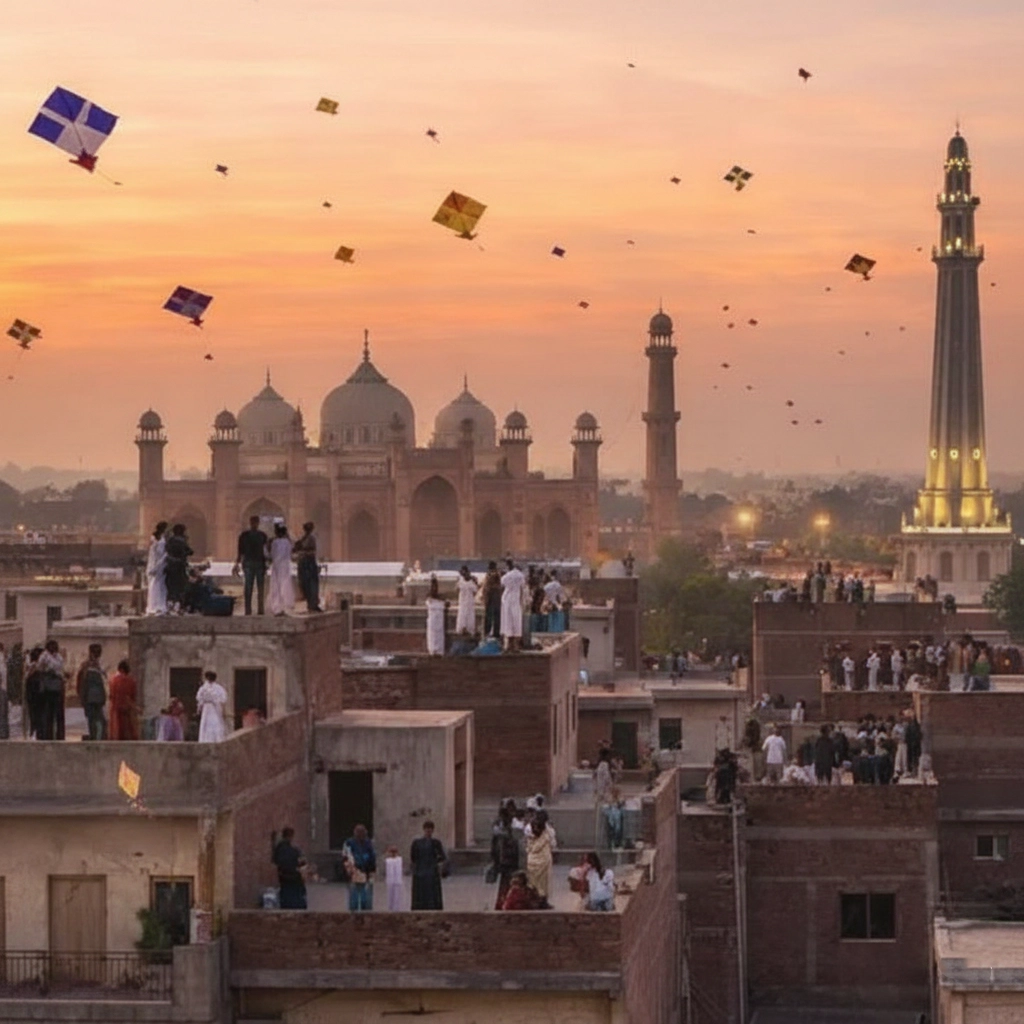
Basant is incomplete without patang, charkhi, and the excitement of kite battles in the sky. If you’ve ever flown a kite during Basant—or even watched others do it—you must have heard some special words shouted from rooftops. These words are part of the unique language of patangbaz, passed down through generations.
If you’re new to Basant or just curious about kite-flying culture, here are the most common words every patangbauz should know.
Patang / Guddi
Patang (also called Guddi) is the kite itself and the heart of Basant celebrations.
During Basant, the sky fills with patang in different colors, shapes, and designs, creating a beautiful and festive view.
Patang represents:
- Joy and freedom
- Friendly competition
- The spirit of spring
Every patangbaz takes pride in flying a strong, well-balanced patang.
Dor
Dor is the thread or string used to fly the kite.
It connects the patang to the charkhi and plays a major role during kite battles.
A good dor should be:
- Strong
- Smooth
- Easy to control
The quality of dor can decide whether a patang survives or gets cut during pecha.
Bo-Kata
Bo-Kata is the most exciting phrase in kite flying.
It is shouted when a kite gets cut and starts floating freely in the sky.
Hearing “Bo-Kata!” means:
- A pecha has been won
- One kite is free in the air
- Celebration time on rooftops
Children and adults often run to catch the falling kite, adding even more excitement to Basant.
Chaipee
Chaipee means applying pressure on the kite string to gain control during a pecha.
It’s a technique where the patangbaz tightens or pulls the string in a smart way to weaken the opponent’s kite.
Chaipee is all about:
- Experience
- Balance
- Knowing when to pull and when to release
A well-timed chaipee can turn the whole battle in your favor.
Kanni
Kanni refers to the sharp edge of the kite string.
This is the part of the string that actually cuts the opponent’s kite during pecha.
A strong kanni means:
- Better cutting power
- Higher chances of winning pecha
Because of safety concerns, modern celebrations encourage safe and non-harmful strings to protect people, birds, and property.
Sharla
Sharla is when the kite string becomes loose, twisted, or out of control.
This usually happens due to poor handling, sudden wind changes, or mistakes during pecha.
When sharla happens:
- The kite may lose balance
- Control becomes difficult
- Chances of kite cutting increase
Experienced patangbaz quickly fix sharla before losing their kite.
Taanga
Taanga means lifting the kite high in the sky to gain a better position.
A higher kite often has an advantage because it can attack from above during pecha.
Taanga is used to:
- Avoid attacks
- Prepare for a strong pecha
- Show confidence and control
Many kite flyers focus on taanga before engaging in a fight.
Conclusion
Basant is not just about flying kites—it’s about culture, language, skill, and tradition. These special words reflect the passion and excitement of patangbaz and bring people together during the festival.
Understanding these terms helps you enjoy Basant even more, whether you’re flying a kite or simply watching the colorful sky. And if you want to experience Basant in its true spirit, celebrating it with a guided tour makes the memories even more special.
 Celebrate responsibly, fly safely, and enjoy the colors of Basant!
