
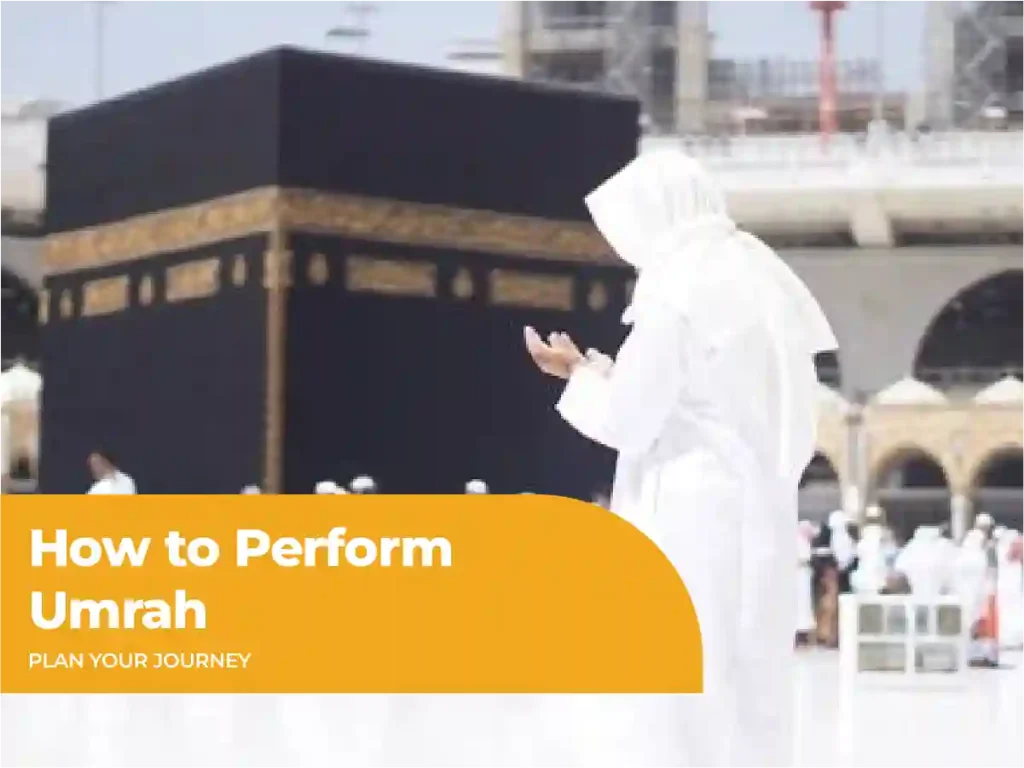
Key Takeaways
- Umrah has four main steps: ihram, tawaf, sa’i, and halq or taqsir. That’s it. No extra rounds, no hidden fifth step.
- You enter ihram at the miqat, the boundary point set for your route, and make your niyyah (intention) before you cross it.
- Tawaf is seven counter-clockwise circuits around the Kaaba. Sa’i is seven trips between Safa and Marwah. Both close out with a short prayer and a hair trim or shave.
- Most first-timers finish the actual rituals in 3 to 5 hours, but plan a full trip of 7 to 10 days if you want to add Madinah.
- Practices around a few details (like exact dua wording or when you can leave ihram) vary by school of thought, so check with your own scholar for anything specific to you.
If you’re Googling “how to perform Umrah” the night before your flight, don’t panic. This guide walks you through it in the order you’ll actually do it, step by step, so you’re not fumbling with a booklet in 110-degree heat outside the Kaaba.
What Is Umrah? Meaning & Significance
Umrah is the “lesser pilgrimage” to Makkah. Unlike Hajj, you can do it any time of year, and it’s not one of the five pillars of Islam, though it carries huge spiritual reward.
The word Umrah roughly means “to visit a populated place,” and in Islamic terms it refers to visiting the Kaaba and performing a specific set of rituals. It’s shorter than Hajj (usually a few hours versus several days) and doesn’t need the huge logistical planning that Hajj does.
For a lot of Muslims, especially in the diaspora, Umrah is the first real chance to stand in front of the Kaaba. On our tours, we see first-timers tear up the second they spot it through the arches at Masjid al-Haram. It’s a moment people plan for years.
Umrah isn’t obligatory the way the five daily prayers or Ramadan fasting are, but most scholars agree it’s highly recommended, and some hold it’s obligatory at least once in a lifetime if you’re able. Ask your scholar if you want the exact ruling for your situation.
The rewards attached to Umrah are also a big draw. Many scholars reference that performing Umrah wipes away minor sins committed between one Umrah and the next, which is part of why so many families try to go more than once. It’s also a chance to reset spiritually, away from work notifications and daily routine, in a way that’s hard to replicate anywhere else.
Umrah vs Hajj: What’s the Difference?
Short version: Hajj is bigger, longer, and only happens once a year. Umrah is shorter and you can do it anytime.
Hajj is one of the five pillars of Islam and is obligatory once in a lifetime for Muslims who are physically and financially able. It only happens during specific days of Dhul Hijjah and involves extra rituals like standing at Arafat and staying overnight in Mina and Muzdalifah. Umrah skips all of that.
| Umrah | Hajj | |
| Timing | Any time of year | Fixed dates in Dhul Hijjah only |
| Duration | A few hours to complete | Several days |
| Status | Highly recommended (some say obligatory once) | Obligatory once for those able |
| Core rituals | Ihram, tawaf, sa’i, halq/taqsir | Ihram, tawaf, sa’i, Arafat, Muzdalifah, Mina, stoning, more |
| Crowd size | Manageable year-round | Millions in a short window |
If you’re short on time or budget, Umrah is the easier entry point. Many of our travelers do Umrah first, then plan Hajj a few years later once they know the ropes.
Before You Go: Preparation & Intention
Before you even land in Saudi Arabia, you need to sort your ihram, your intention, and your miqat point.
Preparation for Umrah starts well before your flight. Pack light, breathable ihram clothing (unstitched white cloth for men; modest, plain clothing for women), sort your Nusuk registration, and read up on the miqat that applies to your route, since it’s different depending on where you’re flying in from.
Entering ihram at the miqat
The miqat is a boundary line around Makkah. Once you cross it, you must already be in the state of ihram.
If you’re flying direct to Jeddah from the US, your miqat is usually set based on your flight path, often over Yalamlam or Qarn al-Manazil depending on your route, and airlines typically announce it before landing. Some travelers prefer to change into ihram at the airport before their flight, just to avoid any confusion mid-air. Our guides recommend doing this at your departure airport if you’re not confident identifying the miqat point from your seat.
It’s also worth packing a small day bag before you leave your hotel for tawaf: unstitched ihram cloth (a spare, in case one gets sweaty), a small bottle for Zamzam water, sandals that slip on and off easily since shoes come off before entering the mosque, and a phone with your Nusuk app downloaded and ready.
Before you cross the miqat, you should have already:
- Showered and trimmed nails and body hair (this is sunnah, not required)
- Changed into your ihram garments
- Made the intention (niyyah) for Umrah, silently in your heart, often paired with saying “Labbayk Allahumma Umrah”
- Started reciting the talbiyah
How to Perform Umrah Step by Step
Umrah has exactly four steps, done in this order: ihram, tawaf, sa’i, then halq or taqsir.
Once you land, head to your hotel to drop your bags, then make your way to Masjid al-Haram. Here’s the walkthrough.
Step 1: Ihram & niyyah
You’re already in ihram from the miqat, so this step is really about confirming your intention and starting your talbiyah out loud.
The talbiyah is a set of phrases you repeat on your way to Makkah. Once you begin tawaf, men stop reciting it out loud. Ihram also comes with a short list of things to avoid: no perfume, no cutting hair or nails, no hunting, no marital relations, and for men specifically, no stitched clothing on the upper body and no covering the head.
Step 2: Tawaf, seven circuits of the Kaaba
Tawaf means walking around the Kaaba seven times, starting and ending at the Black Stone corner.
You move counter-clockwise, keeping the Kaaba on your left. Each full loop is one circuit. If you can, touch or point to the Black Stone (Hajar al-Aswad) at the start of each circuit, but don’t stress if the crowd makes that impossible. Men perform the first three circuits at a slightly quicker pace (raml) if the area allows it, then walk normally for the rest. After your seven circuits, pray two rakat, ideally near Maqam Ibrahim, though anywhere in the mosque works if it’s crowded. Many pilgrims drink Zamzam water right after this step.
Step 3: Sa’i, walking between Safa and Marwah
Sa’i is walking back and forth between the hills of Safa and Marwah, seven times total.
This ritual reenacts Hajar’s search for water for her son Ismail. You start at Safa and end at Marwah (or vice versa depending on the count), and each one-way trip counts as one lap. Men jog briefly between the two green markers along the path; women walk the whole way. The path is now a long, air-conditioned corridor with moving walkways for anyone who needs them, so it’s more accessible than people expect.
Step 4: Halq or taqsir, shaving or trimming the hair
This is the final step, and it’s what officially ends your state of ihram.
Halq means shaving the head completely; taqsir means trimming a small amount of hair. Men can choose either, though shaving is considered more rewarding. Women only trim a small piece, about a fingertip’s length, they should never shave. Once this is done, all the ihram restrictions lift and your Umrah is complete.
Common Mistakes First-Timers Make
Most mistakes come from rushing or not knowing the small details ahead of time.
- Crossing the miqat without ihram already on, especially on connecting flights
- Losing count during tawaf or sa’i (a mental tally or tasbih counter helps a lot)
- Forgetting men can’t wear stitched clothing or cover their heads during ihram
- Trying to touch the Black Stone by force in a packed crowd, which can be dangerous
- Skipping the two rakat after tawaf because of crowd pressure
- Not drinking enough Zamzam water or resting between tawaf and sa’i, leading to exhaustion
On our tours, our guides walk each group through these before entering Masjid al-Haram, so nobody’s improvising mid-ritual.
Another one worth flagging: don’t try to cram tawaf and sa’i back-to-back without a break if you’re feeling dehydrated or dizzy. There’s no rule against pausing between the two, and your Umrah is still valid if you rest, drink water, or even sit down mid-sa’i. Rushing to “finish fast” is not a requirement, and it’s usually how people end up with heat exhaustion halfway through.
Duas & Supplications During Umrah
There are recommended duas for different points of Umrah, but you’re not required to memorize exact wording.
You can recite the talbiyah on your way to Makkah, make dua while circling the Kaaba (any language is fine, your own words work), and say a specific dua when passing between Safa and Marwah. Because exact phrasing and transliteration can vary by source, and because a wrong transliteration can change meaning, we’re not listing specific dua text here. Pick up a verified dua booklet from Masjid al-Haram or ask your group leader for reviewed wording. Sincerity matters more than getting an exact phrase perfect.
After Umrah: Ziyarat in Makkah & Madinah
Once your Umrah rituals are done, most pilgrims spend a few extra days visiting significant sites.
In Makkah, that usually means visiting the Cave of Hira, Jabal al-Nour, and the historical sites around the city (check with your guide, since access to some spots is limited). Many travelers then head to Madinah for a few days to visit the Prophet’s Mosque (Al-Masjid an-Nabawi), pray in Riyad al-Jannah if crowd levels allow, and visit Quba Mosque and Uhud. Madinah ziyarat isn’t a required part of Umrah, but on our tours, it’s consistently the part travelers say they didn’t expect to love as much as they did.
A quick heads-up: ziyarat visits are about reflection and history, not worship rituals themselves, so there’s no formal “steps” to follow the way there is for tawaf or sa’i. Take it slow, bring a small notebook or your phone to jot down what you’re feeling, and don’t overpack your schedule. Families on our tours often say the quiet moments outside Quba Mosque or near Mount Uhud end up meaning more than they expected going in.
How Long Does Umrah Take & When to Go
The actual Umrah rituals take about 3 to 5 hours from ihram to hair trim, but most trips run 7 to 14 days total.
Ramadan and the months right before Hajj season are the busiest and most expensive times to go. If you want smaller crowds and lower prices, look at the quieter months outside of Ramadan and outside the weeks immediately before and after Hajj. Umrah also pauses for a short window each year during the Hajj season itself, so double-check the current Nusuk calendar before locking in dates close to Hajj.
If flexibility matters more to you than price, aim for a weekday arrival rather than a weekend. Masjid al-Haram is noticeably quieter on weekday mornings, which makes tawaf and sa’i faster and a lot less physically demanding, especially for elderly travelers or anyone with mobility concerns. Our guides usually schedule first-time groups for early morning tawaf slots for exactly this reason.
Frequently Asked Questions
Can women perform Umrah without a mahram?
Saudi Arabia has relaxed its mahram rules in recent years, and many women now travel for Umrah without a male guardian, often as part of an organized group. Exact eligibility depends on current Saudi policy at the time you book, so confirm with Nusuk or your agency, and check with your own scholar on the religious ruling for your situation.
How many days do you need for Umrah?
The rituals themselves take a few hours, but most people plan 7 to 10 days total to include Madinah. If you’re only visiting Makkah and keeping things tight, 4 to 5 days can work. Add extra days if you want to slow down, rest between rituals, or fit in ziyarat sites in both cities.
Can you perform Umrah more than once?
Yes. There’s no limit on how many times you can perform Umrah in your lifetime, and many pilgrims do it every year or every few years. Some scholars recommend spacing out repeated Umrahs during the same trip rather than doing back-to-back Umrahs, so ask your scholar if you’re planning multiple during one visit.
What should you wear for Umrah?
Men wear two pieces of unstitched white cloth, no sewn seams, with the head uncovered. Women wear their normal modest, loose clothing with a headscarf, in any color, no specific uniform required. Everyone should pack breathable fabric, since you’ll be walking a lot in the heat.
Is Umrah obligatory in Islam?
Umrah isn’t one of the five pillars, so it’s not obligatory in the same way as Hajj or the five daily prayers. Most scholars consider it highly recommended, and some schools of thought hold it’s obligatory once in a lifetime if you’re able. Practices vary here, so consult your own scholar for a clear ruling.
How much does Umrah cost from the USA?
Total cost from the US typically runs from around $1,500 to $5,000 or more per person, depending on flight class, hotel star rating, and season. This covers flights, visa, hotels, transport, and the package itself, but not shopping or extra meals. Prices spike during Ramadan and shrink during quieter months, so book early for the best rates.
Ready to book your first Umrah? Check out our Hajj & Umrah packages for group and private options, or reach out through our contact page and our team will walk you through everything above in person. If you still need to sort your paperwork, our Umrah visa from the USA guide covers requirements, cost, and how to apply.

Eagles Adventure is a leading travel company in Pakistan, providing domestic, international, and Umrah tours with exceptional safety, comfort, and memorable experiences.