
Key Takeaways
- Pakistani food is bold, spice-forward, and shaped by Mughal, Central Asian, and Persian influences.
- Almost all food in Pakistan is halal by default – US visitors can eat freely anywhere.
- Biryani, nihari, and karahi are the three dishes you cannot leave without trying.
- Pakistani food and Indian food share some roots but differ significantly in flavor, meat use, and cooking style.
- The best way to experience Pakistani cuisine is through the food streets of Lahore, Karachi, and Peshawar.
What Is Pakistani Food?
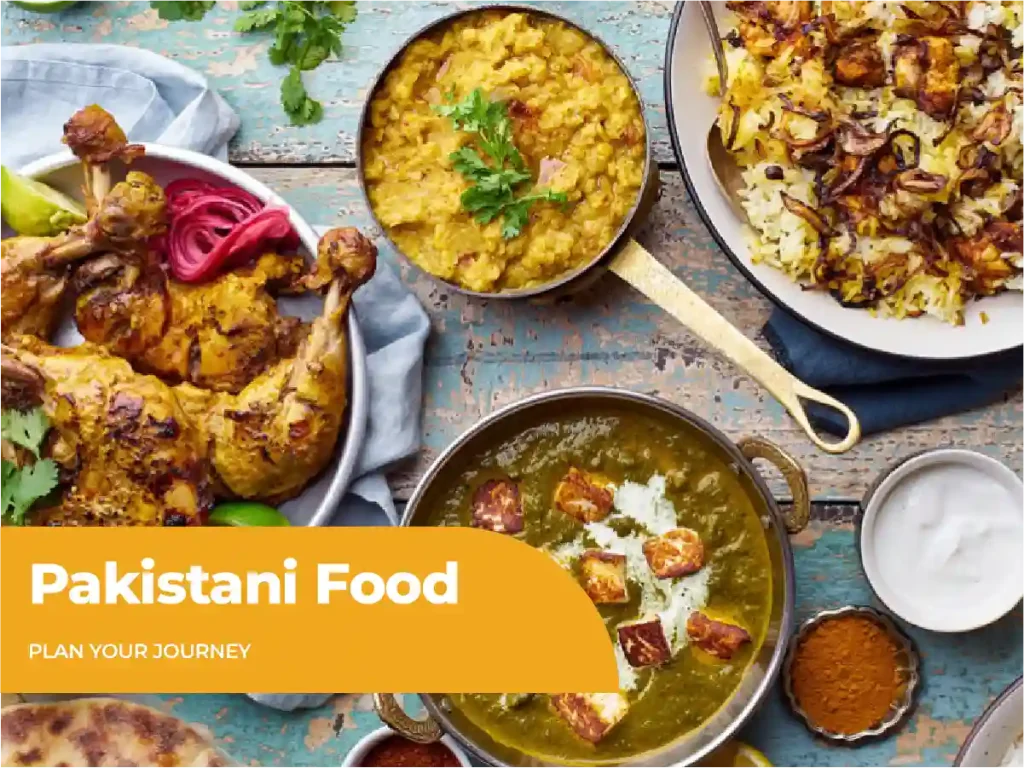
Pakistani food is a rich cuisine built on centuries of Mughal, Central Asian, and Persian cooking traditions. Think slow-cooked meats, hand-ground spices, desi ghee (clarified butter), and bread baked fresh in a clay tandoor oven. It is hearty, aromatic, and deeply tied to regional identity.
The country spans four major provinces – Punjab, Sindh, Khyber Pakhtunkhwa (KPK), and Balochistan – each with its own signature dishes. Meat is central. Lamb, beef, chicken, and goat dominate most menus. Rice and flatbreads are the base for almost every meal.
Pakistani Food vs Indian Food: What’s the Difference?
Both cuisines share Mughal roots and some spices, but they are distinct. Here is a quick breakdown:
| Feature | Pakistani Food | Indian Food |
| Meat focus | Very heavy – lamb, beef, goat, chicken | Wide range including many vegetarian dishes |
| Spice style | Earthy, smoky, whole spices | More variety – often sweeter |
| Cooking fat | Desi ghee and oil | Ghee, oil, butter – varies widely |
| Pork | Never – always halal | Varies by region and religion |
Pakistani dishes tend to be heavier on oil and meat. The flavor profile is more robust and less sweet than most Indian curries.
The Must-Try Main Dishes
Biryani
Biryani is fragrant basmati rice layered with spiced meat and slow-cooked until every grain absorbs the flavor. Karachi’s biryani is famous – spicier, oilier, and more intense than most other versions.
Spice level: medium to high. Try it at: local dhabas (roadside eateries) across Pakistan, especially in Karachi.
Nihari – Often Called the National Dish
Nihari is a slow-cooked beef or lamb shank stew simmered overnight in deep spices. The result is thick, rich, and almost sticky. Served with ginger, coriander, and lime, it is comfort food at its boldest. Nihari is often called the national dish of Pakistan.
Spice level: medium. Try it at: old Lahore’s historic restaurants or Burns Road in Karachi.
Karahi
Karahi is a wok-cooked curry with tomatoes, ginger, and green chillies – fast, fresh, and fiery. Unlike slow-cooked gravies, karahi is made to order. You can often watch it being cooked right in front of you.
Spice level: medium to high. Try it at: Namak Mandi in Peshawar, the gold standard for karahi in Pakistan.
Haleem
Haleem is a thick stew of lentils, broken wheat, and slow-cooked meat blended into one smooth, hearty dish. The flavor is surprisingly deep and complex – smoky, spiced, and incredibly filling. Popular during Ramadan but served year-round.
Spice level: medium. Try it at: any major food street in Lahore or Karachi.
Chapli Kebab
Chapli kebab is a flat, pan-fried beef patty mixed with spices, onions, tomatoes, and pomegranate seeds. It comes from Peshawar. The pomegranate adds a tartness that sets it apart from every other kebab you have tried.
Spice level: medium. Try it at: Peshawar’s local eateries. On our tours, our guides always make this a first stop.
Sajji
Sajji is a Balochi specialty – whole lamb or chicken marinated in salt and spices, then slow-roasted over an open flame. The meat is tender, the skin is charred, and the flavor is clean and bold.
Spice level: low to medium. Try it at: Quetta in Balochistan, or specialist restaurants in Karachi.
Paya, Saag & Other Regional Mains
Paya is a slow-cooked trotter stew – deeply savory and traditionally eaten at breakfast in Punjab. Saag is mustard greens cooked in ghee and spices, served with makki ki roti (cornbread). Both are winter staples and hyper-local experiences most food tourists skip.
Pakistani Street Food
Gol Gappay, Bun Kebab, Samosas & Chaat
Pakistan’s street food is genuinely world-class. Gol gappay are crispy hollow puffs filled with spiced tamarind water and chickpeas – tangy, spicy, and completely addictive. Bun kebab is Pakistan’s take on a burger: a spiced lentil or meat patty with egg, chutney, and raw onion. Samosas and chaat cost almost nothing and are everywhere.
Halwa Puri – The Weekend Breakfast Ritual
Deep-fried bread (puri) served with semolina halwa (a sweet, cardamom-scented pudding) and spiced chickpeas. The sweet-savory combo is iconic to Lahore. On our group tours, this is often the first group breakfast – and it converts everyone every single time.
Breads & BBQ: Naan, Tandoor & Seekh Kebab
Naan is baked fresh in a clay tandoor – chewy, slightly charred, and perfect for scooping curry. Seekh kebab is minced meat seasoned with spices, shaped onto skewers, and grilled over charcoal. Both are absolute staples at every meal and every roadside BBQ across Pakistan. Simple and hard to beat.
Desserts & Drinks
Kheer, Gulab Jamun & Falooda
Kheer is rice pudding cooked in milk with cardamom and rose water – light and fragrant. Gulab jamun are deep-fried milk dumplings soaked in sugar syrup – rich and served warm. Falooda is a cold dessert drink made with vermicelli, basil seeds, rose syrup, milk, and ice cream. All three are available at mithai shops (traditional sweet shops) across Pakistan.
Lassi, Doodh Patti & Kashmiri Chai
Lassi is thick yogurt served sweet or salty – Lahore’s version is the richest. Doodh patti is strong tea brewed entirely in full-fat milk with no water added. Kashmiri chai is a pink, salty-sweet tea from the northern regions. Try it at least once – it is unlike any tea you have had before.
Regional Cuisines of Pakistan
Pakistan is not a monolith. Each province has its own food identity:
- Punjab: Rich curries, nihari, haleem, and sweets. Lahore is the food capital of Pakistan.
- Sindh: Sindhi biryani (tangy and tart), Sindhi curry, and fresh seafood along the coast.
- KPK (Pashtun cuisine): Charcoal BBQ, chapli kebab, sajji, and simple bold flavors. Peshawar leads the region.
- Balochistan: Sajji and slow-roasted meats where ingredient quality does the talking.
Where to Eat It: Food Streets & Cities Worth Traveling For
Three cities are essential for any food trip to Pakistan:
- Lahore Food Street (Fort Road): One of the best open-air dining experiences in Asia, with the Walled City as your backdrop.
- Burns Road, Karachi: The original food hub since the 1950s. Every vendor has a loyal following and a house specialty.
- Namak Mandi, Peshawar: A market dedicated to karahi and sajji, cooked in massive woks over open flame.
If you want to taste Pakistani cuisine where it is actually made, explore our domestic tour packages or join one of our group tours. You can also browse the best places to visit in Pakistan to plan around the regions that interest you most.
Frequently Asked Questions
What is the most famous food in Pakistan?
Biryani is the most recognized Pakistani dish internationally. Locally, nihari holds iconic status and is often called the national dish. Both are available across the country, but Karachi’s biryani and Lahore’s nihari are considered the gold standards (as of October 2026).
Is Pakistani food spicy?
Most dishes carry some heat, but spice levels vary a lot by region and dish. Sajji and paya are milder. Street food tends to run hotter. Cooks are happy to adjust for guests, so do not be afraid to ask.
Is Pakistani food the same as Indian food?
No. They share some history and spices, but Pakistani food is heavier on meat, always halal, and tends to have a bolder, less sweet flavor. Indian cuisine is more diverse and has far more vegetarian options.
What is Pakistan’s national dish?
Nihari is often called the national dish of Pakistan. It is a slow-cooked beef or lamb stew and a staple in Lahore and Karachi.
Is Pakistani food halal?
Yes. Almost all food in Pakistan is halal by default. Pork is not served. This makes it easy for Muslim travelers and anyone who eats halal to dine freely without needing to ask.
What do Pakistanis eat for breakfast?
It depends on the region. Halwa puri and nihari are popular weekend breakfasts in Punjab. On weekdays, paratha with eggs and chai is the everyday standard. In the north, like the Hunza Valley, breakfast often includes local bread, honey, apricot jam, and dried fruits – a much lighter mountain-style start to the day.

Eagles Adventure is a leading travel company in Pakistan, providing domestic, international, and Umrah tours with exceptional safety, comfort, and memorable experiences.