
Key Takeaways
- Attabad Lake formed on January 4, 2010, when a landslide blocked the Hunza River.
- Five tunnels now carry the Karakoram Highway past the lake, so you can drive straight into Gojal.
- Passu Cones, Hussaini Bridge and Gulmit fit into one day if you start early.
- Khunjerab Pass sits at about 15,400 feet. Check its opening status before you go.
- Most travelers cover this route in 1 or 2 days from Karimabad.
Attabad Lake looks like a postcard, but it began as a disaster. On our Upper Hunza trips, it’s the first stop where guests go quiet, then reach for their cameras.
What Is Attabad Lake and How Was It Formed?
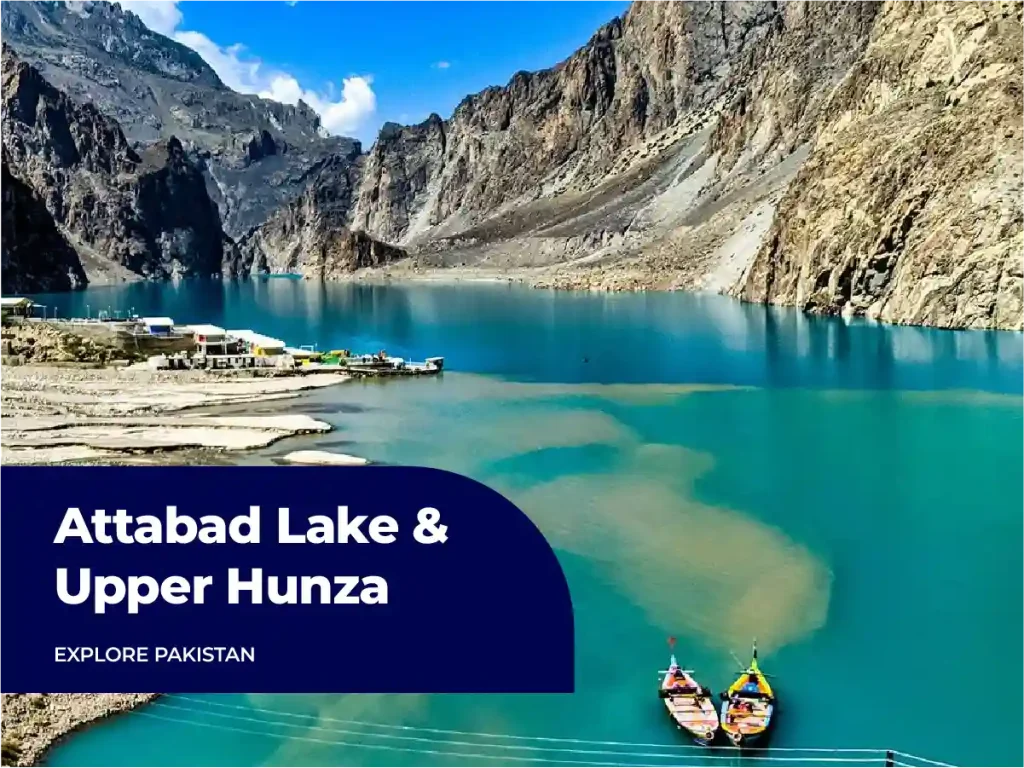
Attabad Lake is a turquoise lake in Gojal, the upper part of Hunza Valley. A landslide created it on January 4, 2010.
The slide buried Attabad village. It killed 20 people and destroyed 26 homes. The rubble then blocked the Hunza River for five months, and water backed up behind it. Villages upstream flooded, including Shishkat and part of Gulmit.
By June 2010, the lake was about 13 miles long and over 330 feet deep. Workers dug a spillway, and the dam held.
The lake also swallowed a long stretch of the Karakoram Highway. For years, travelers crossed it by boat. That changed in September 2015, when the Pakistan-China Friendship Tunnels opened. Five tunnels, about seven kilometers long in total, now carry the road. You can read more in this Wikipedia article on Attabad Lake.
Things to Do at Attabad Lake
Most visitors take a boat ride, walk the shore, and shoot photos. Plan on about an hour or two here.
Boating and Jet Skiing on the Lake
Boats leave from the shore near the main parking area. Rides usually last 15 to 30 minutes. Jet skis run in the busy summer months too.
Always wear the life jacket. Ask the price before you board, since rates change by season. Our guides can help you agree on a fair rate.
Where to Stay: Lakeside Hotels and Resorts
Several hotels sit right on the shore. They’re handy if you want sunrise light on the water. Book early for July and August.
Prefer more choice? Stay in Karimabad, about 30 minutes away. Passu and Gulmit work well too.
The Upper Hunza (Gojal) Route: Overview and Map
The Upper Hunza route runs north from Attabad Lake toward the Chinese border. Locals call this area Gojal, and it’s the wilder, higher part of Hunza.
Planning a longer trip? Our Hunza Valley travel guide covers Karimabad, Altit, and the lower valley.
| Stop | Best for | Time to allow |
| Attabad Lake | Boating, views | 1 to 1.5 hours |
| Gulmit | Village walk, orchards | About 1 hour |
| Hussaini Bridge | Bridge walk, photos | 30 to 45 minutes |
| Passu Cones | Viewpoint, glacier | 1 to 2 hours |
| Khunjerab Pass | Border, high altitude | Most of a day |
Passu: Cones, Glaciers and the Famous Viewpoint
Passu is a small village that sits beneath some of the most dramatic peaks in Pakistan. Many guests call it the highlight of the trip. You can read a short overview on Passu’s Wikipedia page.
The Passu Cones (Tupopdan)
The Passu Cones are a row of sharp, pointed peaks. They belong to the Tupopdan massif, which rises to roughly 20,000 feet. You can see them from the highway, but the best views come from the village side.
Morning light is usually clearest. Late afternoon works well too, though clouds sometimes roll in.
Passu and Batura Glacier Walks
The Passu Glacier sits close to the village. A short walk gets you to the edge. Batura Glacier is nearby and ranks among the longest glaciers outside the polar regions.
Stay off the ice unless a guide leads you. Crevasses can hide under loose rock.
Crossing the Hussaini Hanging Bridge
The Hussaini Hanging Bridge is a long, narrow suspension bridge over the Hunza River. Many travelers cross it without trouble, but it isn’t risk-free.
The bridge uses wooden planks with wide gaps and rope sides. It sways as you walk. Some boards look worn, so test each step. We suggest crossing in small groups and holding the ropes.
If heights bother you, skip the crossing. The bank offers great photos, and you won’t miss much.
Gulmit and the Villages of Gojal
Gulmit is a village a short drive from Attabad Lake. It makes a relaxed stop between the lake and Passu.
The 2010 flood hit Gulmit hard, yet the village has rebuilt. Walk through its apricot orchards, then stop for tea. Many locals in Gojal speak Wakhi, a language brought across the mountains long ago. A friendly hello goes a long way here.
Khunjerab Pass: The Top of the Karakoram Highway
Khunjerab Pass is the highest paved border crossing in the world. It sits at roughly 15,400 feet and links Pakistan with China. Our Karakoram Highway travel guide explains the full road.
What to Expect at 15,400 Feet
You’ll start in Sost, the last Pakistani border town. From there, the pass lies about 86 kilometers (53 miles) up the road. The air gets thin, and it stays cold even in summer. Wind can bite, so bring layers.
Most groups spend 30 to 45 minutes at the top. That’s enough time for photos and a short walk.
Khunjerab National Park and Wildlife
The road climbs through Khunjerab National Park. It’s snow leopard habitat, but you’re unlikely to spot one. You’ll have better luck with ibex and Marco Polo sheep, especially in shoulder months.
Border Rules, Opening Months and Altitude Tips
As of October 2026: reports differ, so confirm the status before you travel. China and Pakistan agreed in 2023 to keep the pass open year-round, but winter closures followed. A July 2026 guide describes seasonal opening, Monday to Friday.
Foreign visitors can usually reach the pass on the Pakistan side. Crossing into China is a different story. It needs a Chinese visa and advance planning, and rules change often.
For altitude, go up gradually. Drink plenty of water, move slowly, and skip alcohol. Tell your guide at once if you get a bad headache.
Suggested 1 to 2 Day Upper Hunza Itinerary
You can do the main stops in one long day, though two days feels far less rushed.
Day 1 (Karimabad to Passu)
- Leave Karimabad early and reach Attabad Lake by mid-morning.
- Take a boat ride, then drive to Gulmit.
- Cross the Hussaini Bridge, then head to Passu for the Cones at sunset.
- Spend the night in Passu.
Day 2 (Khunjerab Pass)
- Drive to Sost, then continue up to the pass.
- Spend time at the top, then return to Passu or Karimabad.
Want it handled for you? Our Hunza and Naltar tour includes these stops with local guides.
Best Time to Visit Upper Hunza
Late spring through early autumn works best. Roads are open, days are warm, and Khunjerab is most likely to be accessible.
July and August bring the biggest crowds. September and October offer clearer skies and golden leaves, though nights get cold. Winter snow can close roads, so we don’t recommend it for first-timers. Browse our other domestic tours in Pakistan to compare seasons and routes.
Frequently Asked Questions
How was Attabad Lake formed?
A landslide hit Attabad village on January 4, 2010. It buried homes, killed 20 people, and blocked the Hunza River for about five months. Water backed up behind the rubble and formed a lake roughly 13 miles long. New tunnels now carry the Karakoram Highway past it.
Is the Hussaini Bridge safe to cross?
Many travelers cross it without trouble, but it isn’t risk-free. The planks have gaps, some boards are loose, and the bridge sways. Walk slowly, hold the ropes, and skip it if you fear heights. Our guides suggest crossing in small groups.
Can you drive to Khunjerab Pass?
Yes, on the paved Karakoram Highway. The drive from Sost is about 53 miles and takes a few hours, depending on conditions. Most visitors hire a driver or join a tour. Check that the road and border area are open first, since snow can close them.
How far is Attabad Lake from Karimabad?
It’s about 9 to 12 miles upriver, roughly a 30-minute drive. Summer traffic or rain can slow things down. Many visitors make it a half-day trip from Karimabad, or stop here on the way to Passu and Sost.
Is Khunjerab Pass open year-round?
Not reliably. China and Pakistan discussed year-round opening in 2023, but winter closures followed. A July 2026 guide describes seasonal operation, Monday to Friday. As of October 2026, confirm the current status with a local operator before you plan.
Can foreigners visit Khunjerab Pass?
Yes, foreign visitors can usually travel to the pass on the Pakistan side. Crossing into China is different. It needs a Chinese visa and advance arrangements, and rules change often. Ask your tour operator for current requirements before you book.